Is This You?
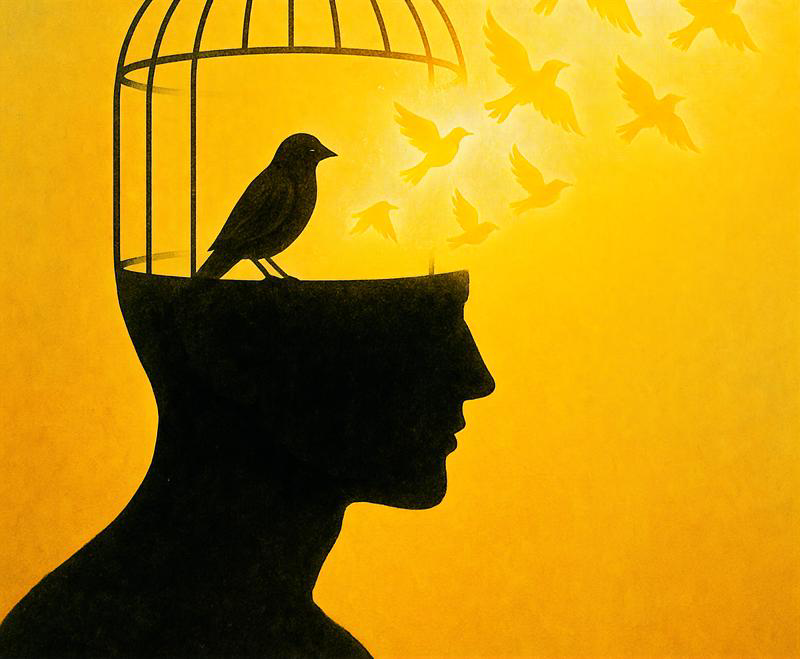
You got the job. You aced the presentation. You’re in the advanced class. From the outside, you look like a success. But on the inside, you’re terrified. You’re waiting for the moment when everyone will discover that you’re a fraud and you don’t actually belong there. This feeling has a name: Imposter Syndrome. You’re so afraid of looking weak or incompetent that you pretend to know everything, which only makes the anxiety worse.
What if the path to true confidence wasn’t about faking it ’till you make it? What if it was about embracing the one virtue our “look-at-me” culture has forgotten?
The Ancient Anchor
A timeless pearl of wisdom, or Subhashita, found in texts like the Hitopadesha, gives us the key:
विद्या ददाति विनयम् |
(Vidyā Dadāti Vinayam |)
Translation: True knowledge gives humility.
This sounds backward to our modern ears. We think knowledge should make you proud and loud. But this verse says the exact opposite. The more you truly learn, the more you become aware of the vast ocean of things you don’t know. This awareness isn’t a weakness; it’s the beginning of real wisdom and quiet confidence.
How This Philosophy Unfolds in the Ancient Texts
Our epics are filled with characters whose power was directly proportional to their humility.
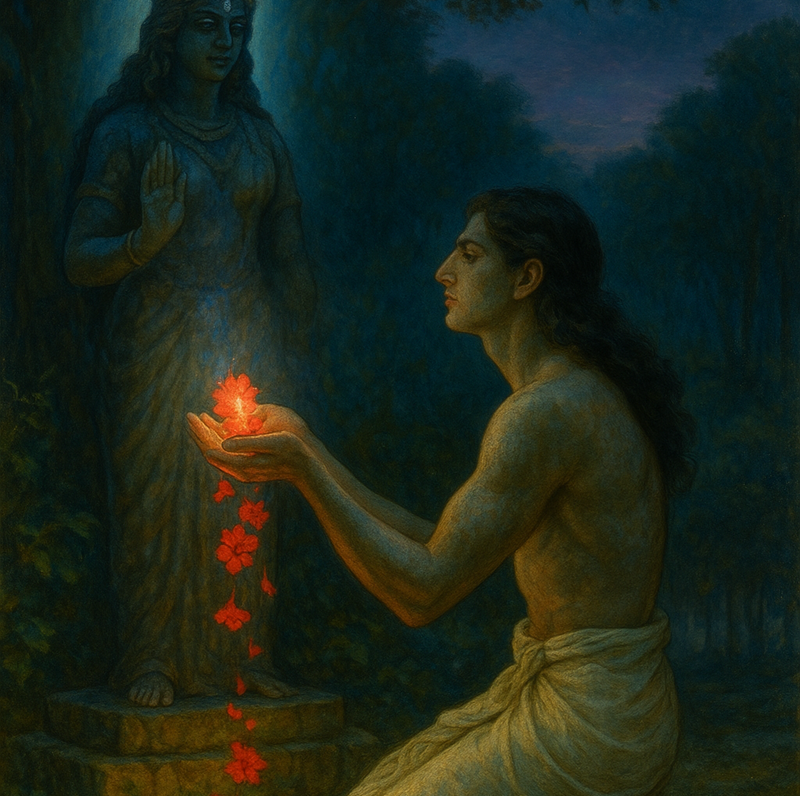
The ultimate example is Hanuman. He is a being of staggering power. He can change his form at will, lift entire mountains, and leap across the ocean in a single bound. Yet, when he first meets Lord Rama, how does he introduce himself? Not with a list of his accomplishments. He approaches with his hands folded, bows low, and says, “I am a humble messenger and servant of Sugriva.” His immense strength did not lead to arrogance, but to a profound desire to serve a righteous cause. His humility was the gateway to his greatness.
Next, consider Shiva, the Mahadeva, the supreme ascetic. He is one of the most powerful deities in the cosmos, the destroyer of evil and illusion. Does he live in a golden palace, demanding worship? No. He sits meditating on a remote mountain, covered in ash, wearing simple tiger skin. His power is so absolute that it requires no external display. He is a constant reminder that the most powerful forces in the universe are often the most quiet and unpretentious.
Finally, there’s the story of Sage Narada, who learned this lesson the hard way. Narada was a great devotee of Vishnu, and he grew proud of his devotion, believing no one was his equal. To teach him a lesson, Vishnu used his power of maya (illusion) to show him a simple farmer. Vishnu explained that this farmer was an even greater devotee. He remembered God twice a day with sincere humility. Narada remembered him constantly, but with a heart full of pride. Narada’s ego was shattered, and he understood that humility is more valuable than any outward display of piety.
The Modern Disconnect
Our culture screams the opposite message. “Flex” culture celebrates bragging. Self-promotion is seen as a survival skill. We are taught to project an image of unshakeable confidence. We are encouraged to have a strong opinion on everything. We must never admit we don’t know. Admitting “I don’t know” feels like admitting defeat. This pressure to perform perfection is the very soil in which imposter syndrome grows and thrives.
Wisdom at Work
How can we use humility as a tool for real confidence?
- In Your Career/Hustle: Imposter syndrome makes you afraid to ask questions. Humility gives you the courage to say, “I’m not familiar with that concept. Can you walk me through it?” This doesn’t make you look stupid; it makes you look curious and teachable—two qualities every great leader values. A humble person listens to their team, gives credit where it’s due, and builds collaboration, not competition.
- In Your Relationships: Ego wants to win every argument. Humility lets you say the three most powerful words in any relationship: “I was wrong.” It helps you truly listen to another person’s perspective without constantly planning your rebuttal. It’s the foundation of empathy and resolving conflict.
- For Your Mental Health: Maintaining an ego is exhausting. It’s a constant, stressful performance. Humility is freedom. It’s the relief of not having to be perfect. It allows you to be a work-in-progress. You can laugh at your own mistakes. You can silence the harsh inner critic that imposter syndrome feeds on.
Modern Sages
The greatest minds in history have understood this principle.
- Dr. A.P.J. Abdul Kalam, one of India’s most beloved presidents and a brilliant scientist, was known for his profound humility. Despite his immense achievements, he remained accessible, kind, and always eager to learn from anyone, especially children.
- Albert Einstein was a brilliant thinker who reshaped our understanding of the universe. He famously said, “The more I learn, the more I realize how much I don’t know.” This is the very essence of “Vidya Dadati Vinayam.”
- Socrates, the father of Western philosophy, built his entire method on one core belief: “I know that I know nothing.” This humble admission was his starting point for inquiry and wisdom.
- Abraham Lincoln, celebrated for his leadership, was known for his humility. He appointed his political rivals to his cabinet, valuing their expertise over his own ego, and ultimately saved a nation.
Your First Step
You don’t need to make a grand gesture. Just try this simple experiment. The next time you are in a meeting or a class, stop and ask if you don’t understand a word. Do the same in a conversation. If you don’t understand a concept or a reference, fight the urge to nod along. Stop and ask. Just say, “Sorry to interrupt, but could you explain what [the term] means? I’m not familiar with it.” Watch what happens. You won’t be judged. Instead, you’ll get a clear answer, and you might even earn a little respect for your honesty. You will have chosen learning over ego. That is the first step to true confidence.